

James Sanson
Lead Short Sale Negotiator
Licensed since August 2002, Maricopa focus since 2004. Handles every short sale on this site personally.
Lead Short Sale Negotiator
Licensed since August 2002, Maricopa focus since 2004. Handles every short sale on this site personally.

Buyer Specialist
7 years in Maricopa. Works with buyers writing offers on our short sale listings. Patient, thorough, answers the phone.

Bilingual Buyer Specialist
Habla espanol. 8 years experience. Works with buyers across 85138 and 85139 on our short sale listings.
What goes in a strong hardship letter, what to leave out, and a Maricopa-specific example you can adapt for your own situation.
Real Broker LLC · Licensed in Arizona
A short sale hardship letter is a one-page written statement to your lender explaining why you cannot continue making mortgage payments. It should be 250 to 500 words, plainly written, with a specific event or change that caused the hardship, quantified financial impact, and a clear request for short sale approval. The eight required elements and a sample paragraph are below.
In this guide
Your hardship letter is one of the most important documents in a short sale package. It is what tells your lender's loss mitigation department, in your own words, why you cannot continue making mortgage payments. A well-written letter does not guarantee approval, but a poorly written one can sink a file that would otherwise have moved forward. This page walks through what a strong short-sale hardship letter looks like, what to include, what to leave out, and shows a sample paragraph for reference.
If you want help working through yours, call 520-838-8037. We help every Maricopa short sale client draft their hardship letter and review it before submission.
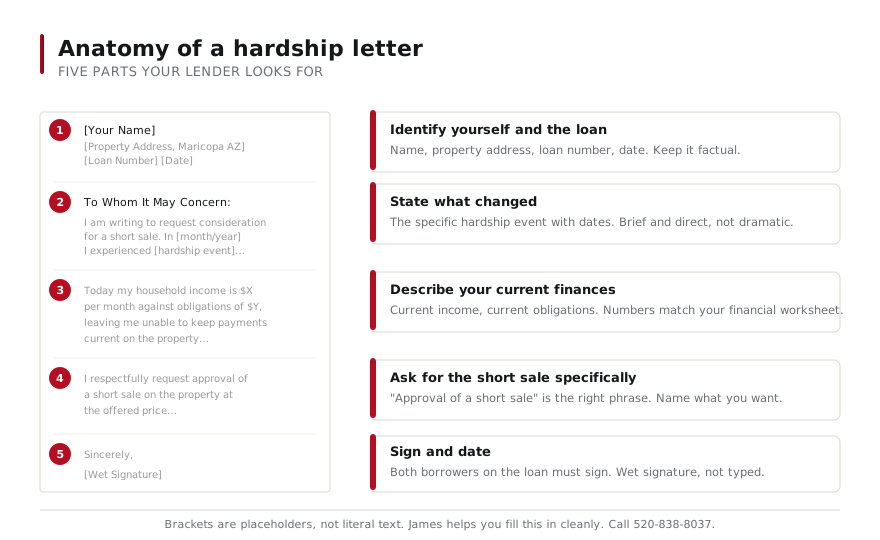
A hardship letter is a brief written statement from you to your mortgage lender explaining your situation. It accompanies the rest of the short sale package (financial documents, the buyer's offer, the listing agreement) but plays a unique role. The financial documents show the lender what your situation is in numbers. The hardship letter tells them why.
Loss mitigation reviewers are processing many short-sale files simultaneously. The hardship letter is often the first thing they read when your file comes in. If the letter is clear, specific, and credible, the reviewer enters the rest of the package with a useful frame. If the letter is vague, dramatic, or contradicts the documents, the reviewer enters the package skeptically. The letter sets the tone for the entire review.
Lenders are also required to document the reasons for approving hardship-based loss mitigation outcomes. Your letter, together with the supporting documents, justifies the approval from the lender's investor and auditors. A weak letter forces the lender to do extra work to justify approval. A strong letter makes it easy.
Every short sale hardship letter should include these eight elements. Most lenders do not have a strict format requirement, but they expect to find this information in the letter.
Required elements
The first sentence of the letter is the most important. It should tell the reviewer who you are, what property is involved, and what hardship is at play. Something direct works best. For example: "I am writing to request approval of a short sale on my home at [address] because [primary hardship, in plain terms]." That single sentence orients the reader and frames everything that follows.
Avoid opening with apologies, lengthy backstory, or expressions of how difficult this is. The reviewer assumes the situation is difficult. The letter's job is to communicate facts, not feelings.
The next paragraph describes the specific event or change that caused the hardship. Be specific about what happened and when. Vague statements like "my financial situation changed" are weak. Specific statements like "I was laid off from my position at [employer] in March 2025" are strong. Dates matter because the lender's review team will cross-reference your letter against the supporting documents (pay stubs, termination letter, medical bills).
If multiple things contributed, lead with the primary one and briefly mention the others. For example, a job loss in March followed by a medical emergency in June can both go in this paragraph. The point is to give the reviewer a clear sense of the sequence.
This is where you translate the event into financial reality. Quantify the change in concrete numbers. Examples of what make this paragraph strong:
You do not need to be exact to the dollar. Approximate figures that match what your supporting documents show are sufficient and far better than no numbers at all.
Briefly explain why other options are not workable. The lender wants to see that you have considered the alternatives. A loan modification is not viable if your income drop is permanent, not temporary. Refinancing is not viable if you have no equity. Selling at full price is not viable if the home is worth less than the loan balance. Forbearance is not viable if you cannot reasonably expect to catch up later.
One or two sentences here is enough. Something like: "A loan modification would not solve the underlying income shortfall, and the home's current market value is below the loan balance, so a traditional sale is not possible."
Close the body of the letter with a clear request. State that you are requesting approval for a short sale on the property and that the property is currently listed (assuming it is). Provide the address again. The standard closing reads something like: "I respectfully request approval for a short sale on the property at [address], which is currently listed with [agent or brokerage]."
Sign the letter, print your name beneath the signature, and date it. If both borrowers are on the loan (typically spouses or co-signers), both should sign. The signature confirms the letter is from you, not from a third party. If your spouse is a co-borrower but unwilling or unable to sign, that situation needs to be documented separately in the package, and we can walk through how to handle it.
The following is an anonymized example of the opening and impact paragraphs from a real Maricopa short-sale hardship letter (names and specifics changed). It illustrates the tone and level of detail that works.
I am writing to request approval of a short sale on my home at 1234 Example Lane, Maricopa AZ 85138, loan number 1234567890. My family has experienced an unexpected hardship that has made it impossible for us to continue paying our mortgage at the current level.
In April 2025, my husband was laid off from his position at his employer of 11 years. His severance covered three months. He has since been searching for comparable employment but has only been able to find part-time contract work. Our household monthly income has dropped from approximately $8,400 to approximately $3,200. After exhausting savings of approximately $11,000 to cover the mortgage and basic household expenses, we are no longer able to maintain payments. The home's current market value is below our loan balance, which prevents a traditional sale.
Two things make that example work. First, the specific numbers (dates, income figures, savings amounts) give the reviewer concrete information that aligns with what the supporting documents will show. Second, the tone is direct and matter-of-fact. There are no expressions of distress, no apologies, no extended backstory. The facts speak.
Three mistakes frequently appear in short-sale hardship letters and weaken the file. The first is excessive emotion. A letter that reads like a plea rather than a statement of facts loses credibility with loss mitigation staff who review many similar files. Save the emotional content for conversations with friends and family.
The second is vagueness. "My situation changed," "things got difficult," "I fell behind" are weak phrasings that do not give the lender what they need to evaluate the file. Specific events, dates, and dollar amounts are what carry the letter.
The third contradicts the supporting documents. If the letter says you lost your job in March, but your last pay stub is dated July, the reviewer flags the inconsistency. Match your narrative to what your documents will show before submission. This is part of why what documents to gather matters so much: the hardship letter and the documents need to tell the same story. For context on where the letter fits in the larger arc, see the Maricopa short sale process from start to finish, plus the short sale timeline for what comes next.
If you have a VA loan and the hardship involves military relocation, the VA Compromise Sale program has specific requirements to know before drafting the letter. For impartial guidance on hardship documentation before approaching the lender, contact a HUD-approved counselor at no cost. The Consumer Financial Protection Bureau also provides general guidance on talking with your mortgage servicer when you cannot make payments.
The questions below come up regularly in conversations about drafting hardship letters. If you want help with yours, talk to the Maricopa short sale page or learn more about what lenders look for in a short sale review. Call 520-838-8037 to get started.
Last reviewed May 15, 2026, by James Sanson, REALTOR. We review this guide regularly and update it to reflect changes in lender requirements, loss mitigation procedures, and Maricopa market conditions.
No pressure, no obligation, no charge. James will call you back personally to discuss your options. For faster help, call 520-838-8037.
James personally handles every short sale on this site. David Hoos and David Ruiz are buyer specialists who help when our short sale listings need buyers.
Listing Specialist, Lead Short Sale Negotiator
Licensed Arizona REALTOR since August 2002, focused on Maricopa since 2004. 1,000+ closings. Built the short sale practice during the 2008-2012 downturn. Personally manages every short sale file on this site.
Buyer Specialist
7 years in Maricopa. Works with buyers, including those writing offers on our short sale listings. Patient, thorough, answers the phone.
Bilingual Buyer Specialist
Habla espanol. 8 years experience. Works with buyers across 85138 and 85139, including those writing offers on our short sale listings.
Whether you're buying, selling, or just exploring, call us. No obligation.
520-838-8037James Sanson | Real Broker LLC | Licensed in Arizona
Call 520-838-8037 right now, or fill out the form and we will reach out within one business day.