

James Sanson
Lead Short Sale Negotiator
Licensed since August 2002, Maricopa focus since 2004. Handles every short sale on this site personally.
Lead Short Sale Negotiator
Licensed since August 2002, Maricopa focus since 2004. Handles every short sale on this site personally.

Buyer Specialist
7 years in Maricopa. Works with buyers writing offers on our short sale listings. Patient, thorough, answers the phone.

Bilingual Buyer Specialist
Habla espanol. 8 years experience. Works with buyers across 85138 and 85139 on our short sale listings.
The first three things to do this week, your real options from forbearance to short sale, and what your lender will and will not consider.
Real Broker LLC · Licensed in Arizona
If you have lost your job in Maricopa and have a mortgage, the most important first step is to contact your servicer's loss mitigation department before missing a payment. Most lenders have specific forbearance programs for job-loss hardship. If your job loss is temporary and recovery is plausible, forbearance lets you pause or reduce payments while you find new work. If recovery is unlikely or the home was already unaffordable, a short sale may be the cleaner path. Talk to a free HUD-approved housing counselor at hud.gov for neutral guidance. Call 520-838-8037 to discuss whether a short sale is right for your situation.
Losing a job and facing a mortgage payment are among the more common forms of housing crisis, and they are among the most recoverable. Lenders specifically recognize job loss as a documentable hardship with established treatment options. There are real paths forward that do not involve losing the home, and there are clean exit options if keeping the home is not realistic. The key is acting quickly, before missed payments narrow your choices.
This page walks through what to do in the immediate aftermath of a job loss, the options available, and how to decide which fits your situation. The James Sanson Team has helped Maricopa homeowners through this exact scenario many times since 2004. Call 520-838-8037 if you want to talk through your specific situation, or speak with a HUD-approved housing counselor for free guidance at hud.gov.
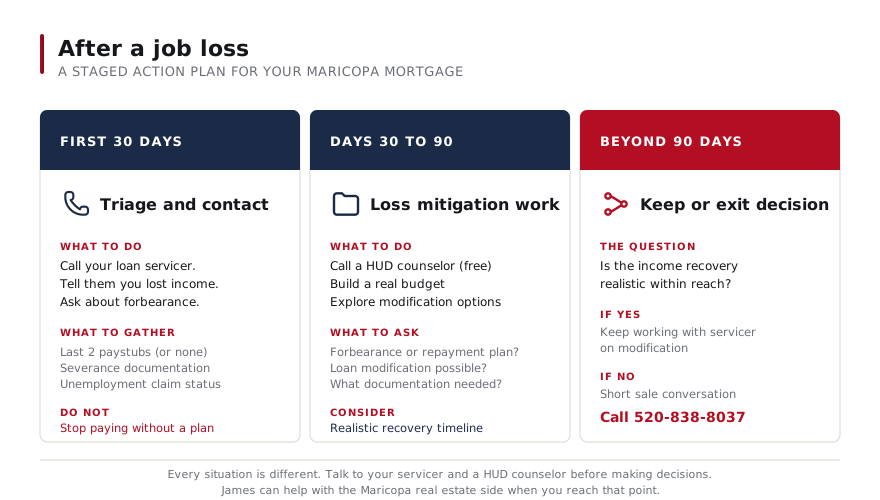
The first week is the most important. Decisions made now (or actions not taken now) shape what is realistically available later. Specific actions to take in this window:
If you have not yet missed a payment, you are in the strongest position you will ever be in. Use it.
In the first 30 days after job loss, the work shifts from immediate triage to building a sustainable plan. Things to do during this window:
By day 30, you should have at least started a conversation with your servicer, applied for unemployment, and have a realistic picture of how long your current resources will last.
Different job loss situations call for different responses. Identify which describes you:
The right option depends on which scenario fits. None of these are decisions to make in the first week. The first month is for assessment.
Forbearance is a temporary pause or reduction of mortgage payments, typically lasting three to twelve months. It is the most common and most accessible option for job-loss situations because it specifically addresses temporary income loss.
How forbearance typically works:
Forbearance fits when:
Forbearance does not fit when:
Forbearance is a great tool for the right situation, but a bad one when used to delay an unavoidable outcome.
If your income loss is permanent or substantial enough that your original mortgage payment is no longer realistic even after returning to work, a loan modification permanently changes the loan terms so the payment fits your new income. Modification works alongside or after forbearance.
Common modification structures:
Loan modification fits when:
Modification is more involved than forbearance and harder to qualify for. The right starting point is your servicer's loss mitigation department, ideally with help from a HUD-approved housing counselor. The James Sanson Team does not negotiate loan modifications directly.
If your job loss is short-term and you have savings or family support, paying the mortgage directly during the gap may be the cleanest path. No lender approval required, no credit impact, no impact on future mortgage qualifications.
This works when:
This option is often underused. Some homeowners assume they need a formal lender program when the math actually supports self-funding for a brief gap. If the job loss is genuinely short and resources are available, this is the cleanest path. It preserves credit, preserves future mortgage qualification timing, and avoids the administrative complexity of forbearance or modification.
When job loss combines with an underwater mortgage, and either a long recovery timeline or a home that was not realistically affordable to begin with, a short sale becomes the path. The lender accepts the sale proceeds as satisfaction of the loan, even though the proceeds do not cover the full balance. The home sells, you exit, and the deficiency is typically waived, subject to lender terms and Arizona anti-deficiency statutes.
Short sale after job loss fits when:
The James Sanson Team handles short sales directly. We have walked Maricopa homeowners through this since 2004, including many job-loss-driven short sales. For the full process walkthrough, see how the Maricopa short sale process works. To understand the broader option set when there is no equity, see options when you have no equity. To talk through whether a short sale fits your situation, call 520-838-8037.
One question that comes up often: if I do a short sale because of job loss, how long before I can qualify for a mortgage again once my income recovers? The waiting periods depend on the loan program you will use next time:
Job-loss-driven short sales are sometimes evaluated favorably under "extenuating circumstances" provisions of various loan programs. The lender may offer reduced waiting periods if the hardship was documented and the borrower has since stabilized their finances. The specifics depend on current agency guidelines, lender overlays, and your particular profile at the time of application. When you are ready to apply again, speak with a licensed Arizona mortgage loan officer about current requirements.
Important.This page describes options for Maricopa homeowners experiencing job loss in general terms. Your specific situation may have legal, tax, or financial dimensions that require professional advice. For unemployment benefits questions, contact the Arizona Department of Economic Security. For legal questions, consult an Arizona-licensed attorney. For tax questions, consult a CPA. For free, neutral mortgage assistance counseling, contact a HUD-approved housing counselor at hud.gov. Each option above is subject to lender approval, eligibility requirements, and conditions that vary by situation. No specific result can be promised.
Job loss is one of the more recoverable forms of mortgage hardship, and most Maricopa homeowners who face it work through it successfully without losing their home. Acting quickly, before missed payments narrow the options, is the single most important variable. Call 520-838-8037 to think through whether selling fits your situation, with no obligation. If you have not yet talked to a HUD counselor, that is usually the right first call. For a broader context, return to "owe more than your home is worth" or read about falling behind on your mortgage if you are already past the first month. For other forcing-event situations, see selling an underwater home in divorce. If you are already in foreclosure territory, see the pre-foreclosure resource page. Maricopa short sale specialists with over two decades of experience helping homeowners through job-related hardship.
No pressure, no obligation, no charge. James will call you back personally to discuss your options. For faster help, call 520-838-8037.
Whether you're buying, selling, or just exploring, call us. No obligation.
520-838-8037James Sanson | Real Broker LLC | Licensed in Arizona
Call 520-838-8037 right now, or fill out the form and we will reach out within one business day.